The moment when a good-looking website stops being enough
You've invested in a website that looks the part. The design feels modern, the brand comes through, and everything appears to be in place. But when you step back and look at what it's actually doing for the business, something feels wrong.
Traffic arrives, but enquiries don't follow at the rate they should. Potential customers browse without taking the next step. You make changes to messaging or layout, but the results don't shift the way you expected.
This is the point where businesses start questioning whether more traffic is the answer, when the real issue is conversion. The website isn't broken. It just isn't working as hard as it could.
When the website starts doing the work for you
A website that performs feels different the moment you use it.
Potential customers arrive and quickly understand what the business does and why it matters to them. They move through the site without hesitation, finding what they need, and each step feels natural rather than forced. Enquiries become more consistent, and the conversations that begin there start further along, because the website has already done its part.
This is the outcome most businesses are looking for when they invest in a conversion focused web design agency. The site shifts from something you maintain to something that actively drives growth.
We've reached this point with businesses across sectors, from early-stage SaaS companies refining their first conversion funnel to established B2B firms restructuring sites that had stopped delivering. The starting context varies, but the pattern is consistent: when the experience is shaped around how potential customers actually think and behave, performance follows.
The hidden gap between how a site looks and how it performs
The gap is rarely visible from the inside.
Many websites are built with design decisions made around aesthetics, without enough consideration for how potential customers will experience each interaction. The site looks right, but it isn't built around the questions potential customers arrive with, or the moments where they hesitate.
Closing that gap requires understanding potential customers deeply: what they need, where they slow down, and how they move through a decision. When those insights shape the experience, the business benefits. When they don't, even well-designed sites underperform.
Research consistently supports this. Companies that invest in the full customer experience, not just individual touchpoints, see stronger revenue growth, higher retention, and better commercial outcomes. The pattern holds across industries: when the experience is shaped around how customers actually move through a decision, the business benefits. When it isn't, even well-designed sites underperform.
The through-line is the same. When the experience is built around the customer, performance improves. When it isn't, problems compound.
The shift from presenting pages to supporting decisions
A conversion focused approach starts with what potential customers need to understand, believe, and feel before they're ready to act. Aesthetics matter, but they work alongside structure, content, and flow to support real decisions. Each section of a page guides potential customers toward the right next step based on where they are in their journey.
That changes how the work unfolds.
It starts with getting clear on who potential customers are and what they're trying to do. What questions do they arrive with? Where do they get stuck? What would make them confident enough to proceed? That understanding shapes everything that follows.
From there, attention shifts to the journey itself. Looking at real behaviour rather than assumed paths reveals friction that quietly blocks progress without being obvious. Only then does the solution take shape, and instead of relying on instinct, it's tested against how potential customers actually behave.
Structure is shaped around how potential customers move, not internal assumptions. Messaging is designed to support decisions, not just explain services. This is where conversion rate optimisation, web design, and UX thinking meet as one discipline, rather than separate concerns passed between teams.
What makes this partnership effective
For this approach to work, it needs more than a good brief. It needs a shift in how the project is approached from your side as well. Workshops and collaborative feedback sessions are where the work gathers momentum, because your insight into the business, your customers, and what drives real conversations is what shapes the direction.
That input isn't gathered once and filed away. It's used throughout, refining decisions as the work develops and keeping everything aligned with what actually matters. Ideas are tested and evolved together, rather than revisited later when they're harder to change.
A lean, focused team keeps this working. Responsibility stays clear, decisions get made with full context, and the people doing the work aren't stretched across five other projects. Larger agencies bring collective experience, but you often receive it in fractional amounts. A focused team gives you that experience directly, applied consistently.
The more aligned the thinking at the start, the more confidently everything moves forward.
Where to start if your website isn't delivering
If your website isn't generating the results you expect, it's rarely just a design issue. It's a clarity issue, and often a customer understanding issue underneath that.
The businesses we've worked with that have seen the biggest improvements didn't start by redesigning everything. They started by getting clear on three things: who their potential customers actually are and what they're trying to achieve, where friction sits in the current experience based on real behaviour, and which moments matter most, so effort concentrates where it will have the greatest effect.
When those foundations are in place, everything else becomes simpler. Structure gets clearer. Messaging lands faster. And the website starts doing what it should have been doing all along.
That's the role of a true conversion focused web design agency. Not just making things look better, but making them work better for the people using them.
See how this works in practice
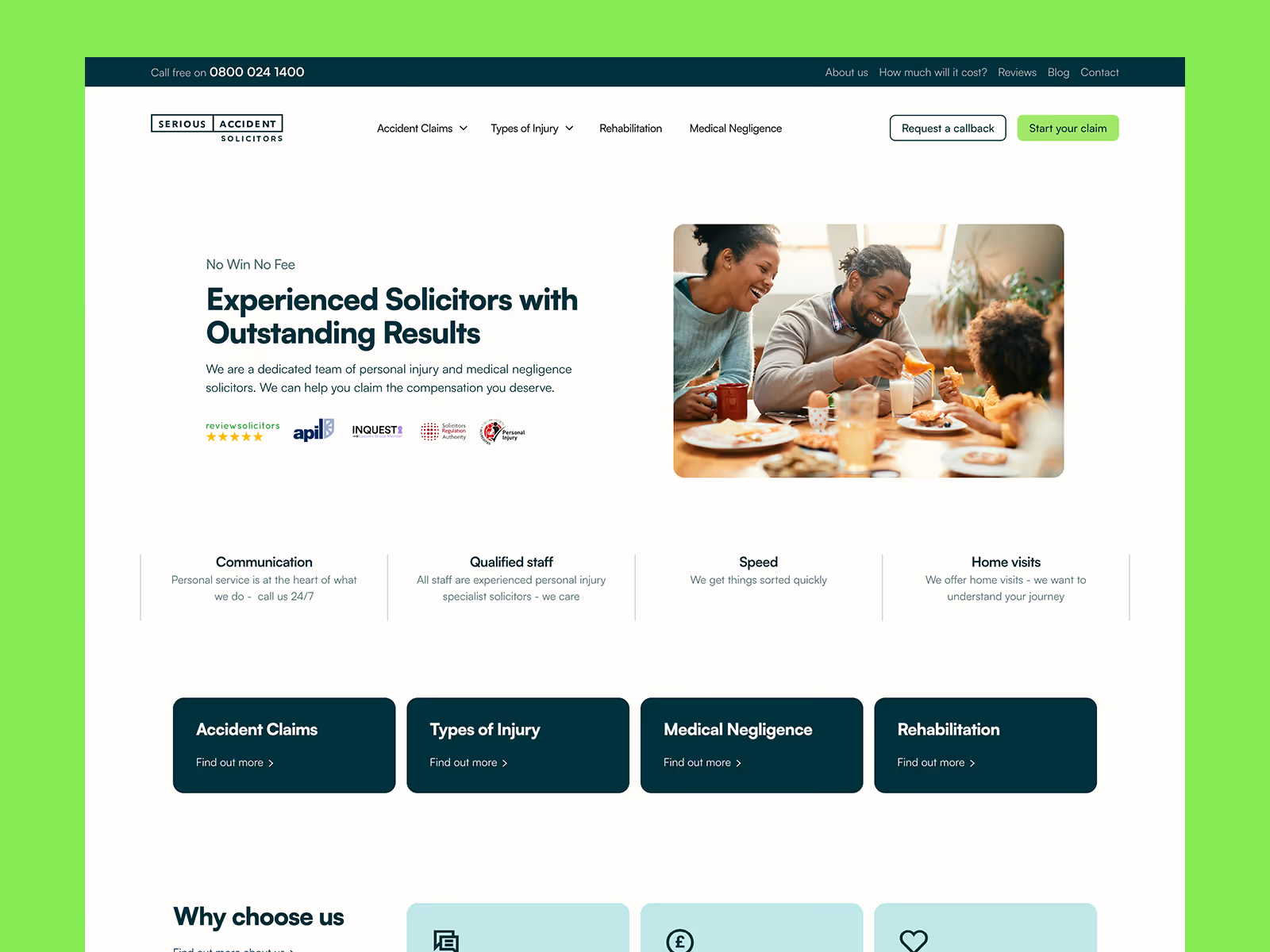
Serious Accident Solicitors
We helped a legal services firm identify and remove the friction that was costing them enquiries. Key messages were buried, navigation reflected internal structure rather than how potential clients thought about their situations, and trust signals sat on pages most visitors never reached.
By restructuring the experience around how potential clients actually evaluate legal services, the site started converting at a significantly higher rate without any increase in traffic.